Buying PP Rainwater Modules: A Procurement, Installation and Handover Checklist
A document-led checklist for importers, contractors and project buyers, from a consistent quotation brief to installation coordination and maintenance handover.
In this article
Before purchasing PP rainwater modules, confirm the system function, usable capacity definition, model-specific evidence, site conditions and complete accessory scope. Before installation, align the approved drawings, delivery inspection, construction method and inspection responsibilities. Before handover, obtain the records and maintenance information the operator will need. A crate price alone cannot answer these questions.
International procurement adds distance between the designer, product supplier, installation contractor and eventual operator. A small ambiguity at quotation stage can become a much harder question when the shipment reaches the site. The remedy is a clear sequence of decisions and documents, with named responsibility for each interface.
This checklist is written for commercial buyers, importers and contractors considering underground polypropylene modular rainwater systems. It is a procurement and coordination guide, not an installation manual. Exact construction requirements must come from the selected product documentation, project design and applicable local rules.
1. Freeze the functional brief before comparing prices
Start by stating whether the installation is intended for rainwater reuse, temporary detention, infiltration or a specifically designed combination. If that decision is still open, request separate budget options. Avoid asking suppliers to quote one unspecified “rainwater collection system” and assuming that all responses cover the same duty.
Define the capacity being purchased. A quotation might refer to the outside volume of the array, its internal water-storage volume or the usable operating volume. Require the bidder to state its basis and show the quantity calculation. Resolve that definition before comparing a price per cubic metre.
The purchasing file should also identify the drawing revision, installation location, project country and expected programme. A supplier working from an older footprint or a different connection arrangement may produce a coherent quotation that is nevertheless wrong for the current design.
For the broader development sequence, the U.S. Department of Energy's alternative water implementation guidance connects resource assessment with system requirements and scope development. The practical point for an export enquiry is to establish a shared brief before treating a budget figure as an order-ready offer.
2. Request evidence for the actual proposed model
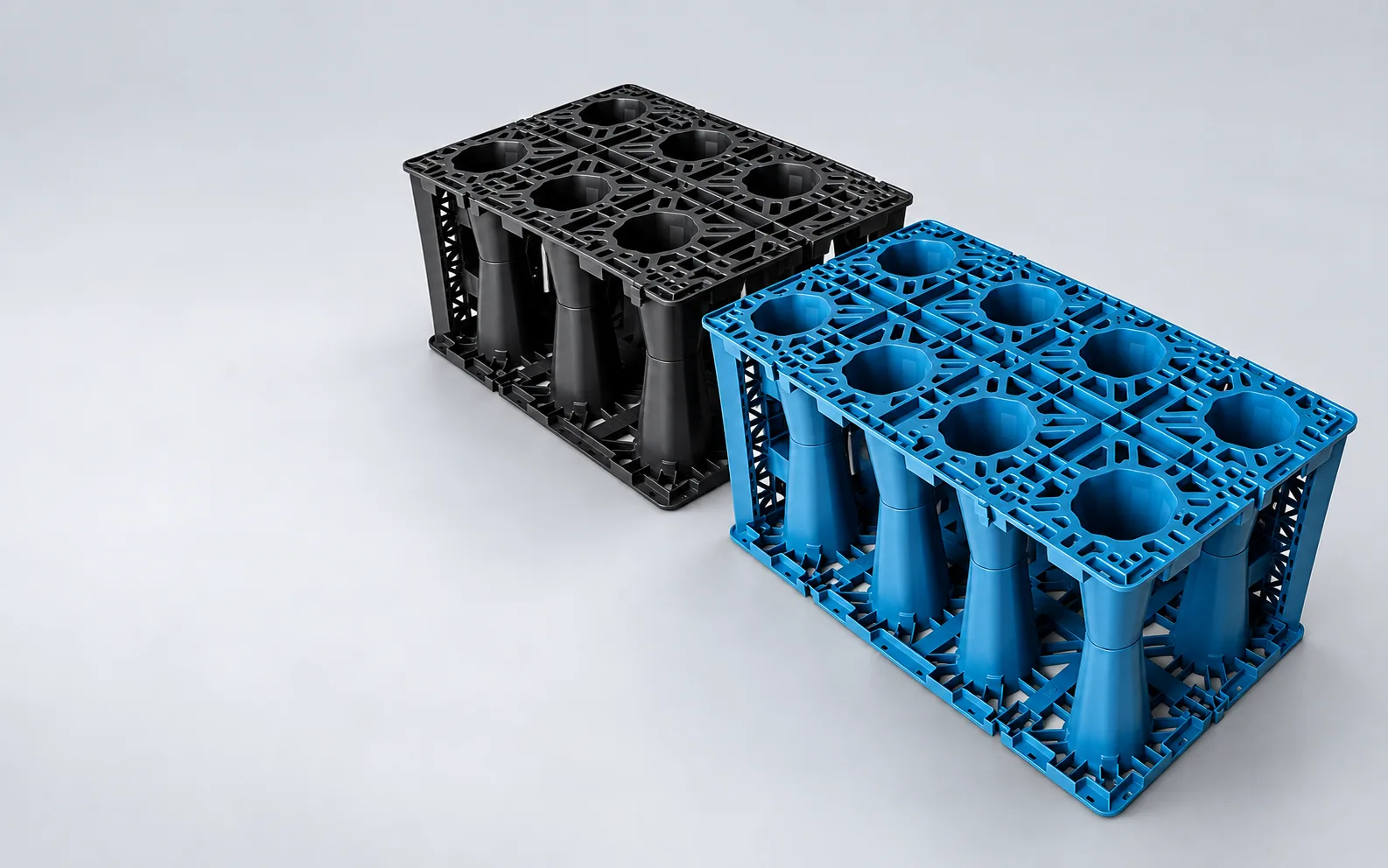
Ask for a product identification that can be followed through the quotation, drawings, technical documents and delivery records. “Blue PP module” is a description, not a sufficiently specific product identity. Record the model or product code and the relevant document revision.
Request the information required by your engineer, such as assembled dimensions, internal storage data and applicable structural evidence. Ask how the evidence relates to the proposed configuration and project conditions. Do not assume that a document for another module in a product family automatically covers the offered arrangement.
The CIRIA geocellular design assessment checklist distinguishes storage, structural performance, site conditions and documentation. It includes short- and long-term performance considerations. Use it as background for a disciplined review, not as proof that a particular product meets current requirements in your market.
A test report should be reviewed for what was tested, under which method, and how the result is relevant. An unexplained headline loading number is not the same as acceptance of a complete installation. Ask the engineer to identify missing evidence rather than inviting the purchasing team to interpret a structural result outside its competence.
If certification is required, request the actual certificate and its scope. Check the named product, issuing organisation, status and any limitations through the appropriate issuer. This article does not claim that HONGLIANG holds any particular certification or that a supplier brochure establishes local approval.
3. Put product identity and acceptance into the order
Once a model is accepted, carry the same identification into the purchase order. Include the agreed drawings and document revisions, not just the description copied from an early email. Ask the supplier to identify any proposed substitution before dispatch and specify the process for reviewing it.
Agree on a practical delivery-inspection record. For example, the receiver can check packaging condition, product identification, quantities and visible damage against the order. The exact acceptance criteria should be documented by the project team. A visual check does not replace a product test or a design review.
Request the relevant handling and storage instructions before the shipment arrives. The site may need to decide where the materials will be stored and how they will be moved to the work area. Those arrangements are easier to organise before vehicles arrive than while unloading is already under way.
If the programme is phased, ask how deliveries will be labelled and matched to installation zones. A staged delivery plan should remain consistent with the current layout. Keep a record of any quantity change so procurement, the supplier and the site team do not work from different totals.
Share your project brief and the technical documents requested by your engineer. We can discuss the available model information and the proposed supply scope.
4. Compare the full bill of materials
A module-only price may be appropriate, but it should be labelled as such. Ask whether the offer includes connectors, panels or other model-specific assembly components. Then separate envelope materials, inspection access, filters, chambers and connections according to the accepted system design.
| Package item | Question to resolve | Record in the comparison |
|---|---|---|
| Module array | Does the model and quantity match the layout? | Product code, revision and quantity |
| Assembly components | Which connectors or panels are required? | Included parts and exclusions |
| Envelope | Which water-retaining or permeable arrangement is specified? | Materials and responsible installer |
| Access and controls | Who provides chambers and hydraulic interfaces? | Supply and design boundaries |
| Delivery | What transport and unloading scope is agreed? | Named destination and exclusions |
| Documentation | Which records accompany the product? | Required documents and due dates |
When comparing bids, leave an explicit “not included” column. An omission is easier to manage when visible than when hidden behind the phrase “standard accessories.” If another contractor supplies an excluded component, record that party and the agreed interface.
For logistics, confirm the commercial terms, destination, packaging and responsibilities in the actual contract. Freight estimates, import requirements and lead times can change. Request a current written offer rather than relying on a general figure in a blog or a past shipment.
5. Hold a coordination review before site work
Bring together the current drawing, the product information, the construction method and the inspection plan. The purpose is to check that they describe the same installation. Resolve discrepancies in module orientation, array limits, access locations or pipe connections before the components are assembled.
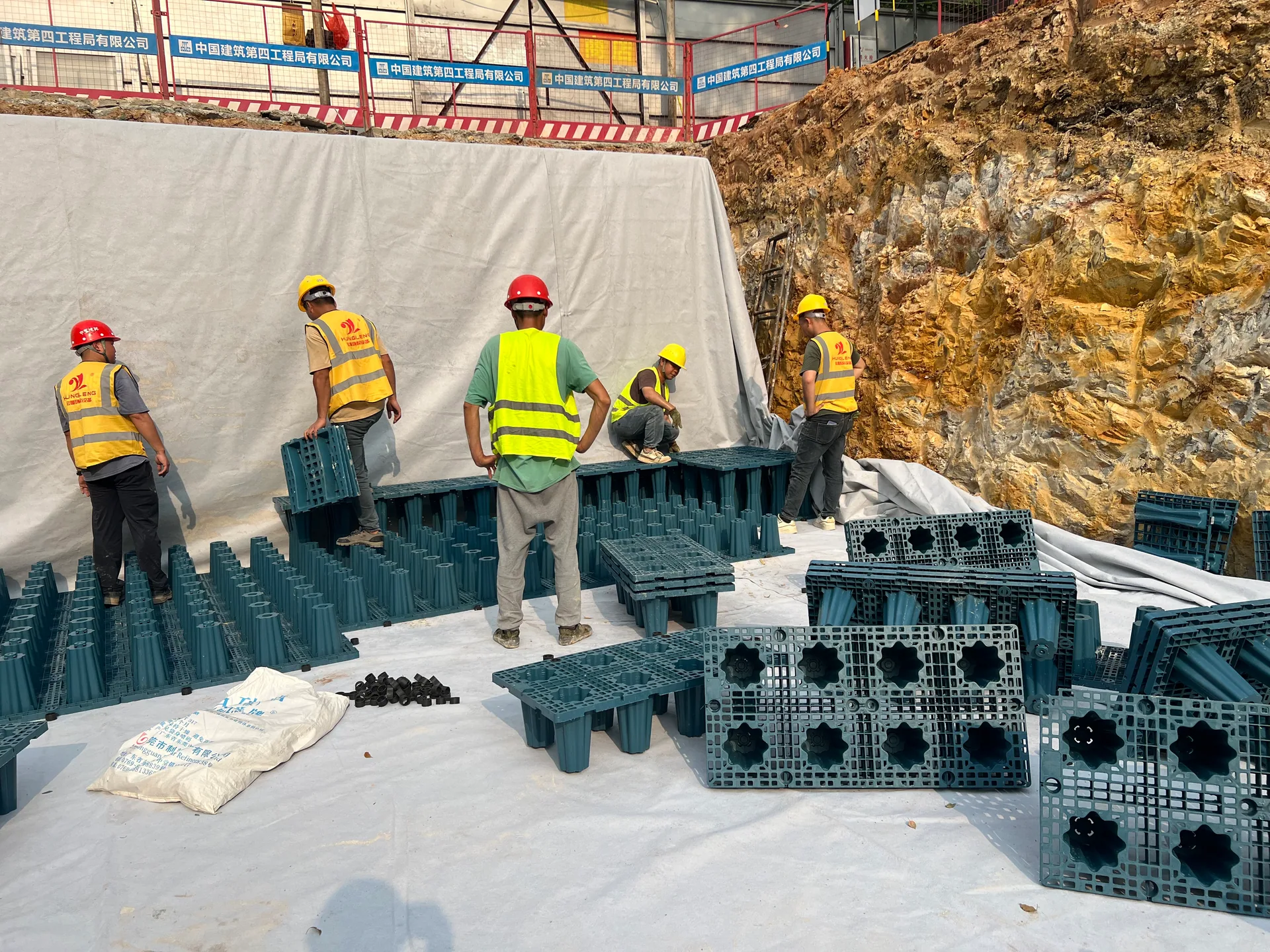
A useful review assigns ownership of the surrounding work as well as the crates: excavation, ground preparation, groundwater management, envelope installation, pipework, backfill and surface reinstatement. This is an editorial coordination checklist; it does not prescribe the technical method for carrying out those activities.
Construction safety needs its own competent planning. OSHA's trenching and excavation resources explain the serious hazards associated with excavation work in the United States. Applicable requirements differ by jurisdiction. No AI illustration or generic product article should be used as a protective-system design or permission to enter an excavation.
Identify the points at which work should be checked before it becomes concealed. The project team can define those checks, acceptance criteria and sign-off responsibilities in advance. If a required inspection cannot take place, the contractor should know who can decide the next step.
6. Treat the envelope and connections as critical interfaces
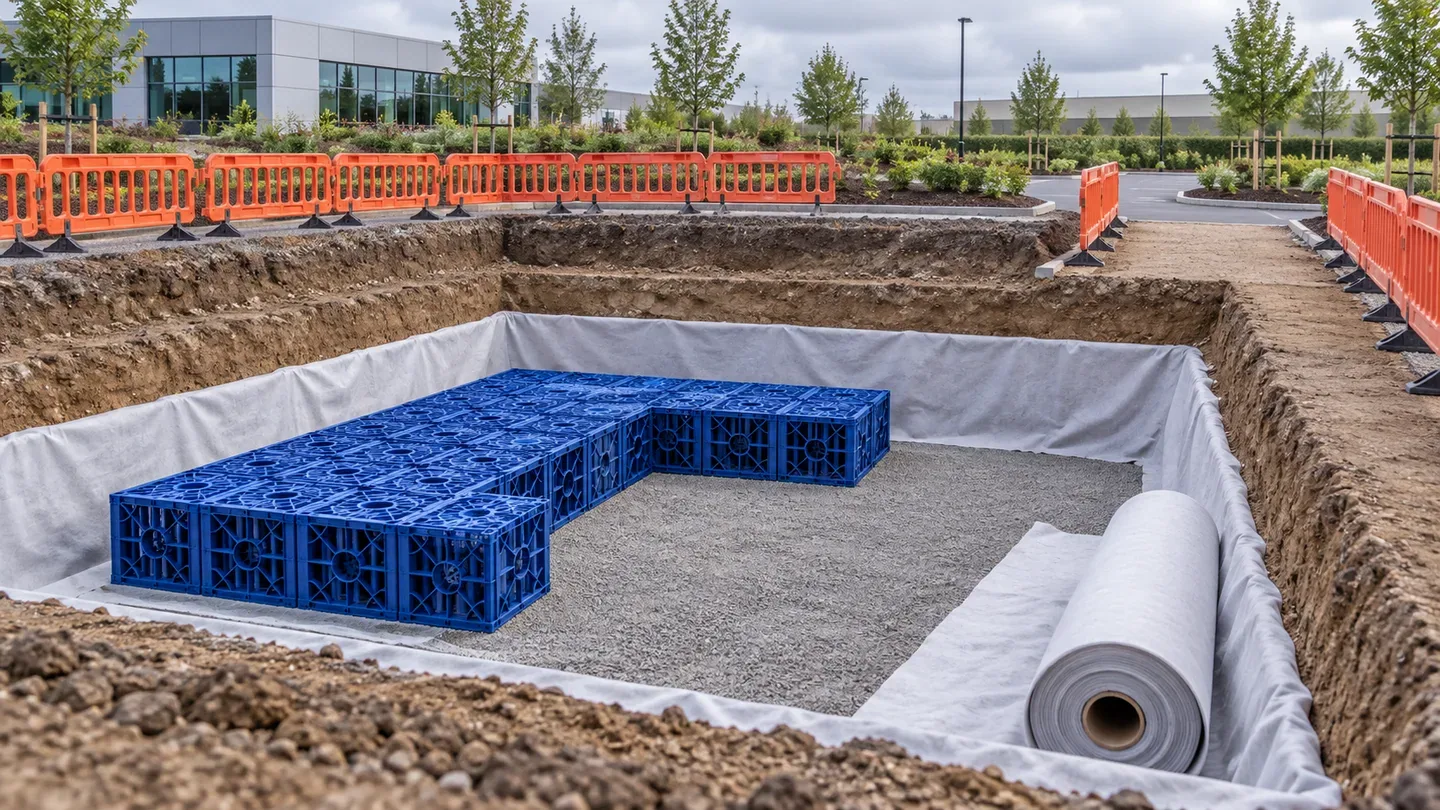
Confirm the intended function of each surrounding layer. A water-retaining membrane, permeable geotextile and protective layer should not be described as though they perform the same job. The approved section and materials schedule need to identify the arrangement for the chosen system.
Pay particular attention to ownership at pipe penetrations and access connections. Ask which party supplies each interface, which detail applies, and who checks the completed work. A generic note saying “seal as required” may leave an important scope decision unresolved.
Do not copy a seam method, membrane thickness, backfill lift or compaction requirement from an unrelated product manual. Obtain the current instructions for the selected product and the project's approved method. If documents conflict, request a written resolution through the responsible design and construction team.
Document any change before concealing it. For example, if a connection needs to move because of an unforeseen site obstruction, record the revised location and its acceptance. Photographs can support the record, but the photograph alone does not show that a change has been reviewed.
7. Keep installation records useful to the operator
An installation record should help a future operator identify what was built. Ask for dated photographs and references to the relevant locations or drawing zones, rather than a folder of unnamed close-ups. Include the accepted layout and a clear record of deviations from the original proposal.
The handover package can distinguish product records from construction records. Product identification and supplied documents come from the relevant supplier. Site inspections, installation changes and acceptance records belong to the parties performing or approving that work. Keeping these roles separate makes the file easier to audit.
Ask the operator what information will be needed to locate filters, chambers and access points after landscaping or surfacing is completed. A clear asset list and location plan can be more useful than a large bundle of general literature that never identifies the installed equipment.
Ensure the project has defined any commissioning checks and the responsible persons. Do not invent a universal test procedure in the purchase order merely to fill an empty section. The selected system's documentation and professional design team should establish the appropriate checks and acceptance criteria.
List the items you need from HONGLIANG and those supplied locally. We can discuss a proposal with explicit inclusions and exclusions.
8. Plan maintenance while access can still be changed
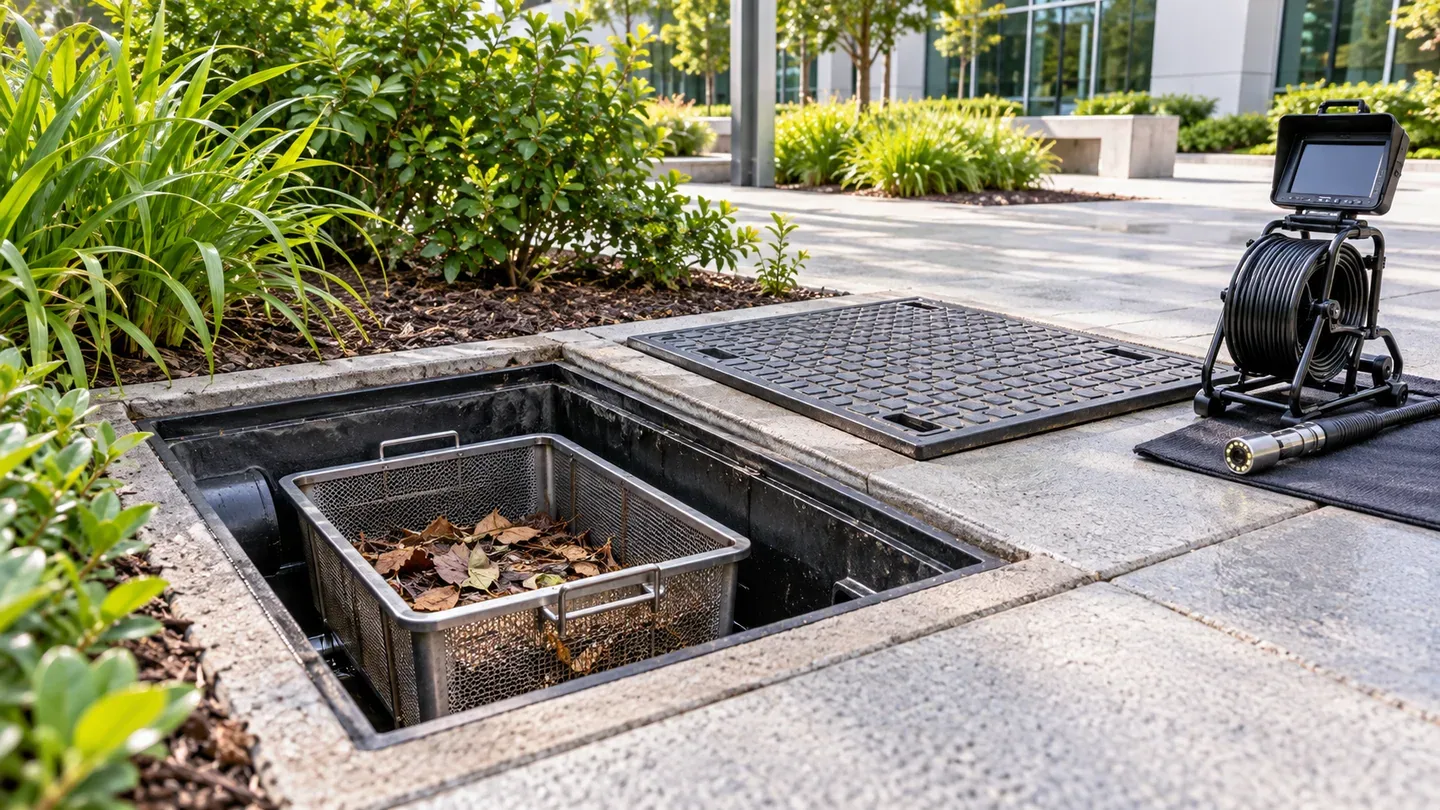
Maintenance should be considered before the final layout is fixed. Ask how the relevant components will be inspected and serviced, where equipment can be positioned and who will perform the work. If access is impractical on paper, it is unlikely to become easier after the site is finished.
susdrain's maintenance guidance recommends a maintenance plan and manufacturer or designer advice for below-ground systems. It also emphasises responsibility and resources for ongoing maintenance. This supports a planned operational approach rather than a promise that buried modules need no attention.
Obtain a site-specific schedule with tasks, responsible parties and recordkeeping expectations. Ask the designer or supplier to explain what should trigger an additional inspection. Do not impose an arbitrary interval from this article as though it were valid for every catchment and operating environment.
Keep pretreatment and accessible components in the discussion. The geocellular systems overview identifies inspection of upstream and associated drainage components as part of maintenance. A system should not be marketed as maintenance-free simply because the main storage array is underground.
9. Use a responsibility matrix to close the gaps
For each important decision, record who provides information, who reviews it and who accepts the result. The same company may perform several roles, but the roles should still be visible. This is especially helpful when a distributor purchases modules while another contractor designs or installs the surrounding system.
A compact matrix might cover capacity, structural review, envelope selection, hydraulic controls, site preparation, installation inspection and maintenance handover. Give each unresolved item an owner and a due date. Avoid a final row marked “all parties,” which can leave everyone expecting someone else to act.
Before order release, hold a short exceptions review. Ask each bidder or supplier to identify departures from the enquiry and confirm how they have been resolved. Keep the accepted exceptions with the final quotation so the site team can understand the agreed scope without reconstructing a long email conversation.
If the project proceeds in stages, repeat the review when the design changes materially. A new surface use, altered footprint or revised water-management duty may require another technical assessment. Procurement should communicate changes rather than assume the previous acceptance applies indefinitely.
10. Questions international buyers often ask
How should I compare PP rainwater module prices?
Use the same model requirements, capacity definition and supply scope. Separate accessories, freight and site work. Ask each bidder to list assumptions so the comparison does not reward an incomplete proposal.
Is a high compressive-load figure enough to approve a system?
No single headline figure should be treated as approval for every installation. Ask the responsible engineer to review the applicable evidence against the actual configuration and site conditions. The purchasing team should collect documents and close gaps, not certify the design.
Can I use another manufacturer's installation manual?
It may illustrate the kinds of documents needed, but it should not govern a different product automatically. Obtain current instructions for the selected model and resolve their relationship with the approved project method before construction.
Should I request an inspection sample?
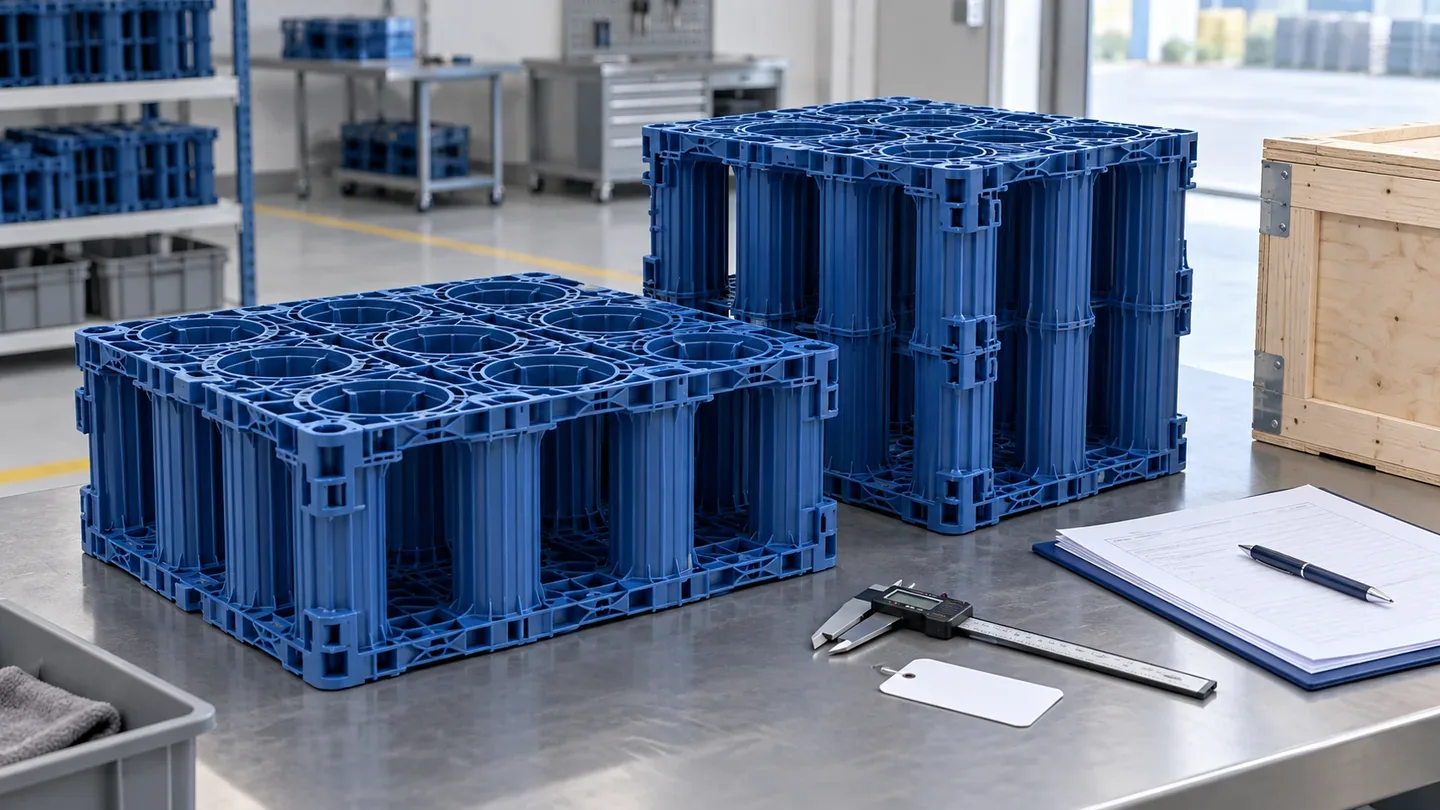
A sample can help clarify product identity, appearance and assembly discussions when agreed with the supplier. It does not establish the performance of every delivered unit or replace the documentation required by your specification. Define the purpose of the sample before requesting it.
Who is responsible for maintenance?
The project needs an explicit answer. Name the owner or service party, identify the tasks and provide the appropriate documents. Do not assume that the installer, module supplier or property manager automatically holds every operational responsibility.
Send a brief that can become an actionable quotation
Start with the project location, intended function, required capacity, current layout and requested technical documents. Include the supply boundaries you already know. Where the engineering decisions remain open, mark them clearly so the first response can address the missing information.
Explore the PP rainwater module product page, compare storage, detention and infiltration functions, or review capacity terminology and sizing inputs before preparing the request.
Use the form to describe your location, system duty and document requirements. You can review the message before opening email or WhatsApp.