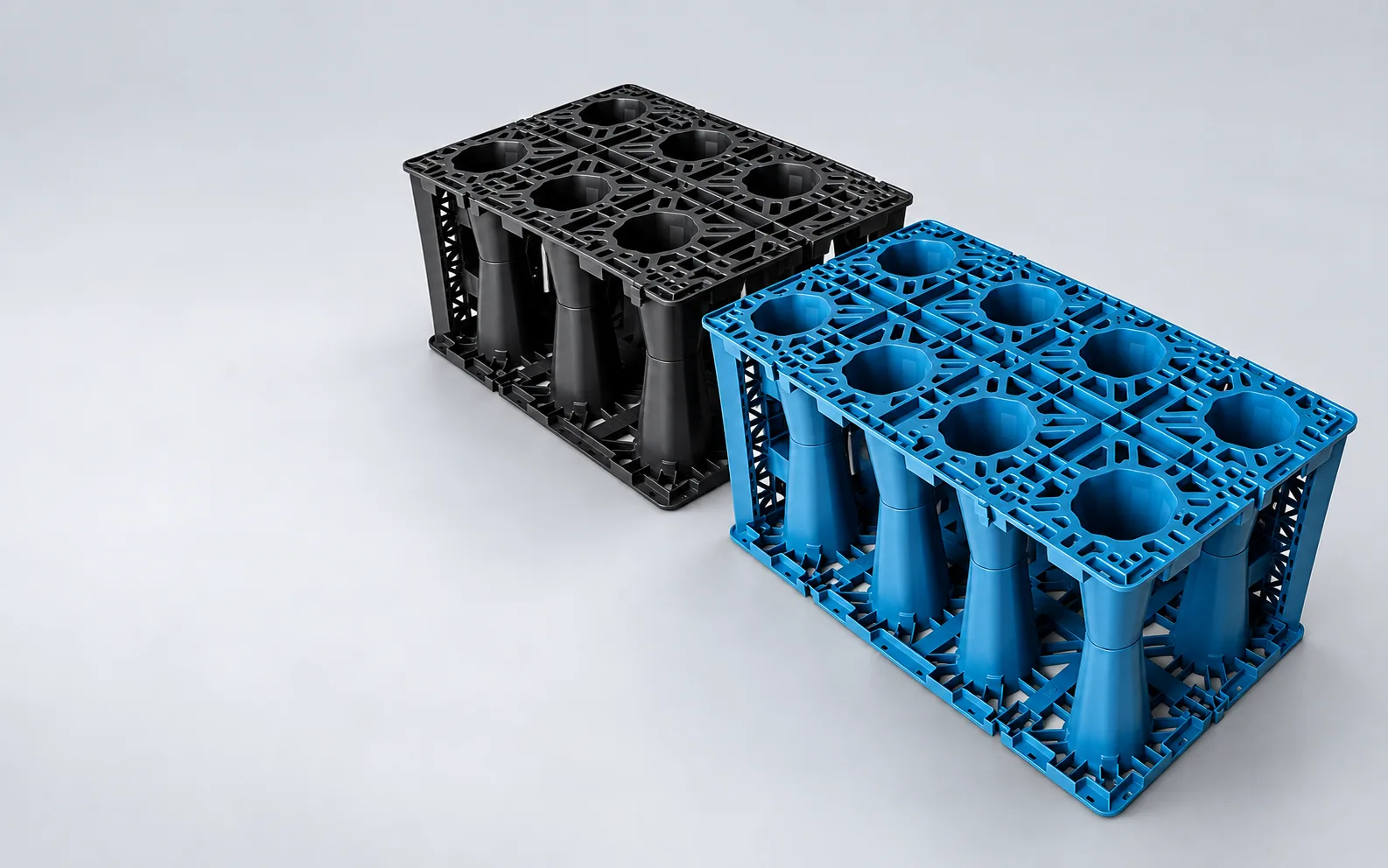
Planning a rainwater project? Start with the right questions.
A practical checklist to turn site information, drawings and project requirements into a clearer product enquiry.
In this article
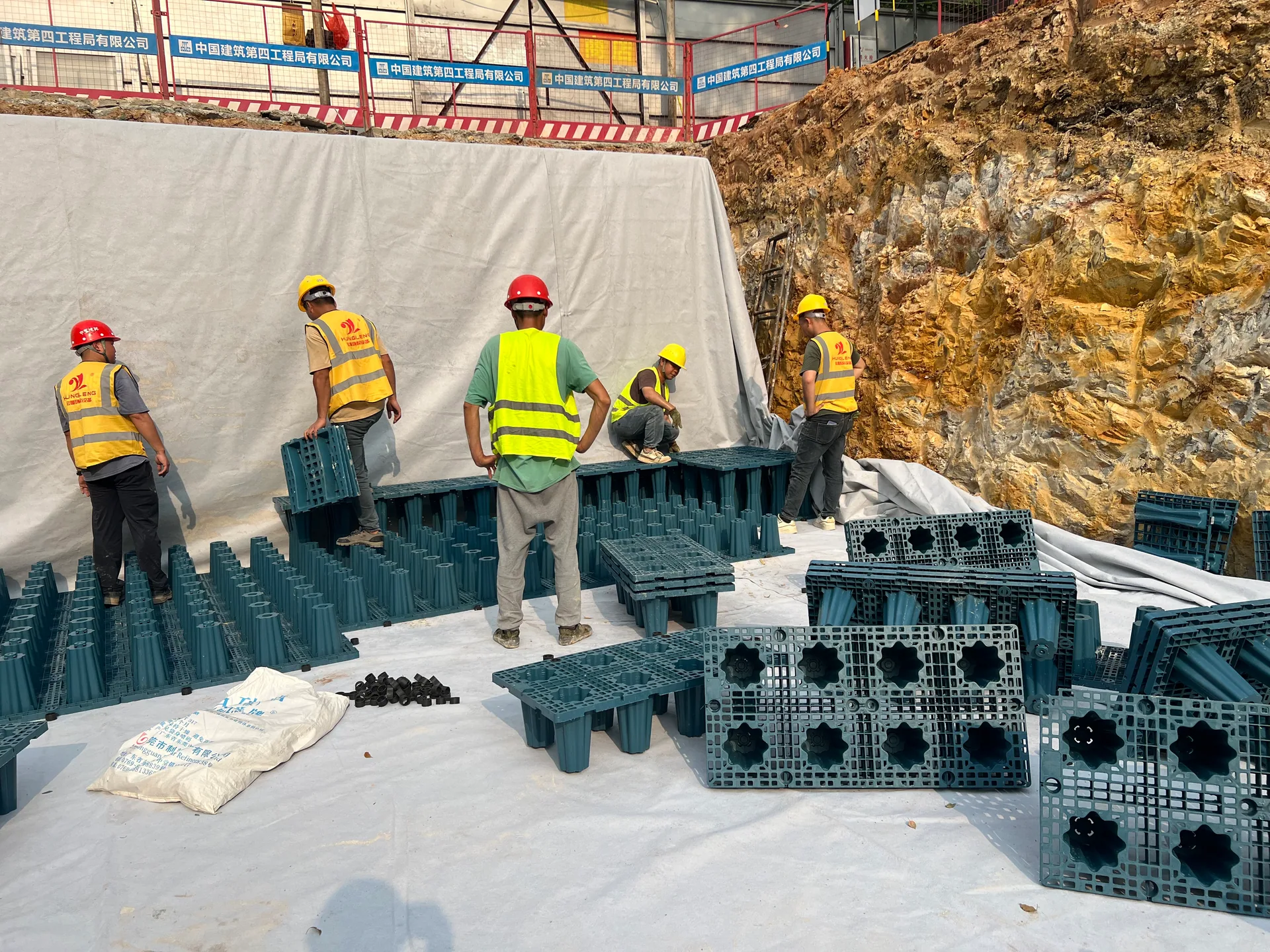
A useful rainwater project enquiry starts with context. The more clearly you describe the site and the intended outcome, the easier it becomes to discuss a suitable module configuration and a coordinated supply scope.
This guide brings those inputs into one place, so your team can prepare a focused first conversation.
01 / DEFINE THE BRIEF
Start with the project objective
Tell your supplier what the project needs to achieve. Your enquiry should identify the intended function and the requirements already established by the project team.
Describe the intended use of collected water and any capacity already specified.
Include the project’s temporary storage and discharge-control requirements.
Share the relevant ground assessment and the proposed infiltration design.
If the function is still being assessed, say so. It is more useful to identify an open design question than to treat an assumption as an approved requirement.
Explore the three system functions02 / UNDERSTAND THE SITE
Gather the site information
A drawing is a useful starting point, especially when it is accompanied by a short written brief. Include the available footprint, proposed depth, surface use and the location of existing connections.
| Information | What to share |
|---|---|
| Project location | Country, city and project setting |
| Available space | Layout drawing with dimensions and site constraints |
| Surface use | Landscaping, pedestrian areas or vehicle areas |
| Ground conditions | Available geotechnical and groundwater information |
| Water connections | Inlets, outlets, overflow and inspection access |
| Project timing | Design stage, procurement plan and installation schedule |
Keep drawing revisions clear. If the site layout changes, make sure the updated information is used in the product discussion.
03 / REVIEW THE DETAILS
Ask for the right documents
Product selection should be connected to the requirements of the actual project. Ask for documentation that relates to the proposed model and make any project-specific acceptance criteria clear.
- Module dimensions and the relevant product drawing
- Model-specific capacity and material information
- Supporting performance or test documentation requested by the project
- Assembly and installation instructions
- Packing, inspection and delivery documentation
This article is a planning checklist. Confirm dimensions, capacity, loading and installation requirements against the selected product documentation and approved project design.
04 / COORDINATE THE COMPONENTS
Define the complete supply scope
Discuss the module array alongside the supporting components. Clear boundaries help everyone understand which items are being supplied and which are provided elsewhere in the project.
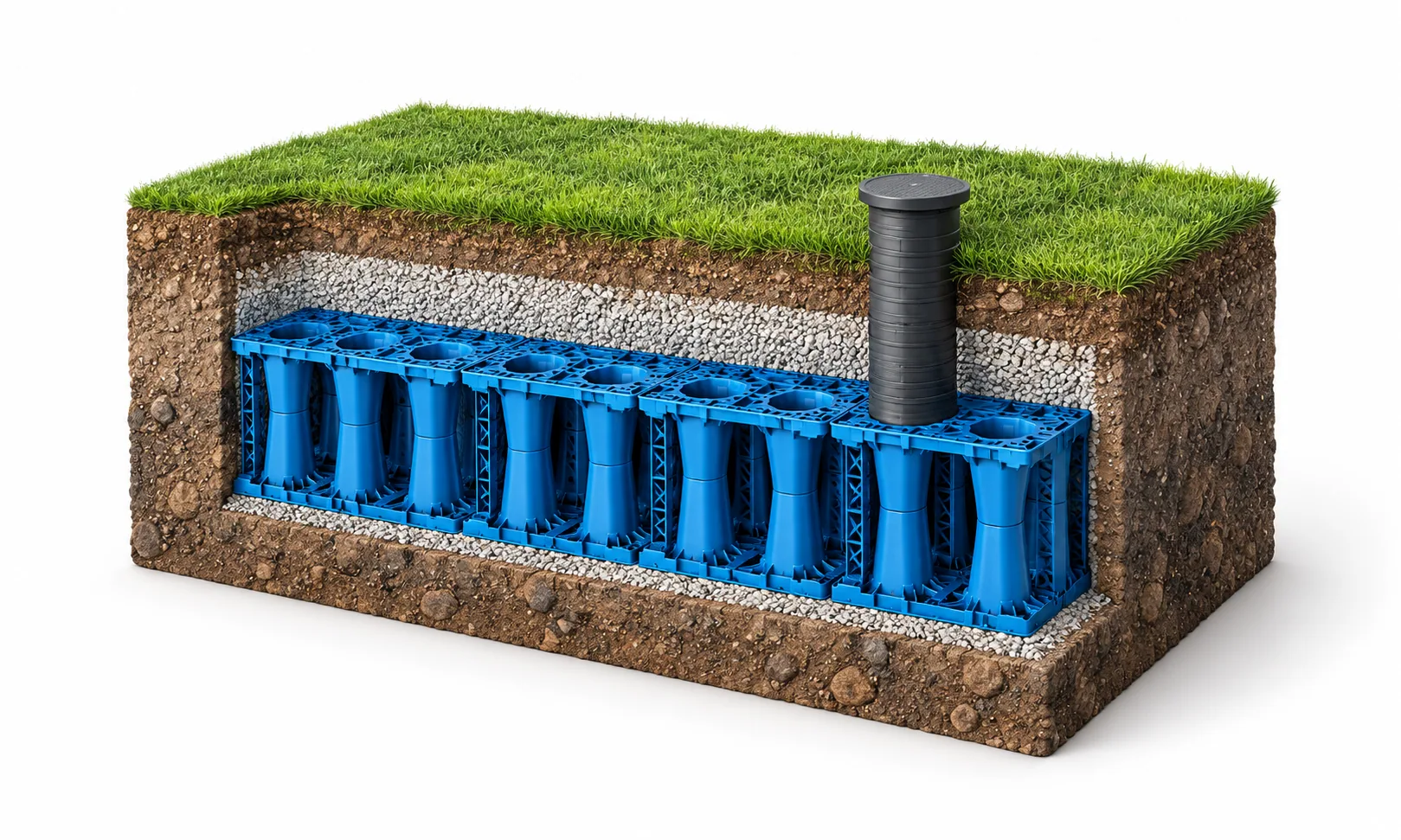
Your scope may include modules, liner or geotextile, filters, connecting components and inspection access. Record the agreed scope and the technical information still needed.
PRODUCT REFERENCEPP Rainwater Harvesting Module05 / YOUR NEXT STEP
Prepare your enquiry checklist
Before starting the conversation, bring these details together:
- Project location, contact person and company
- Intended system function and required volume, if known
- Site drawings, available footprint and installation depth
- Surface use and project loading requirements
- Requested components, documents and delivery timing
You do not need every answer to begin. Highlight the details that are confirmed and the questions that still need coordination.
Discuss your project